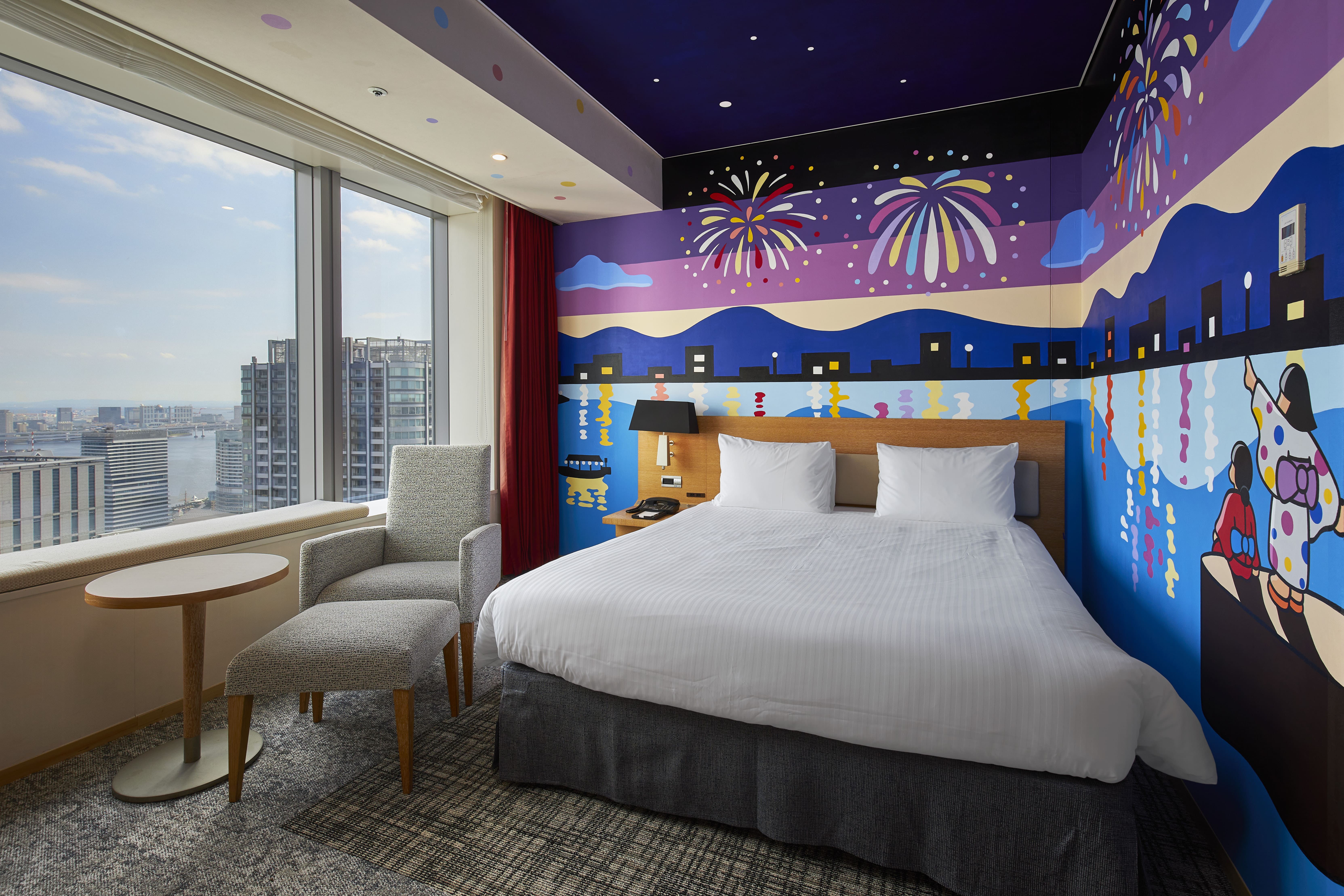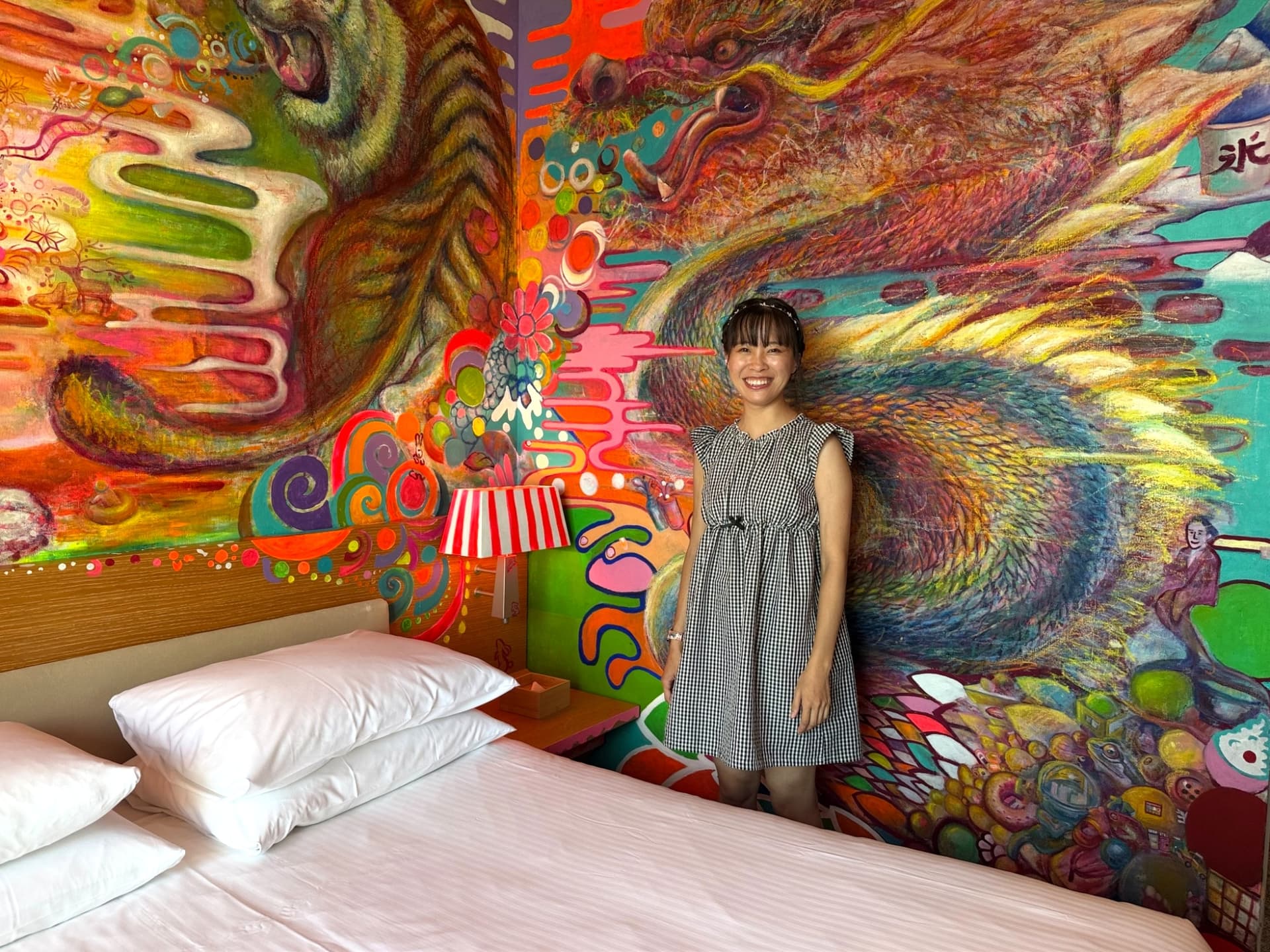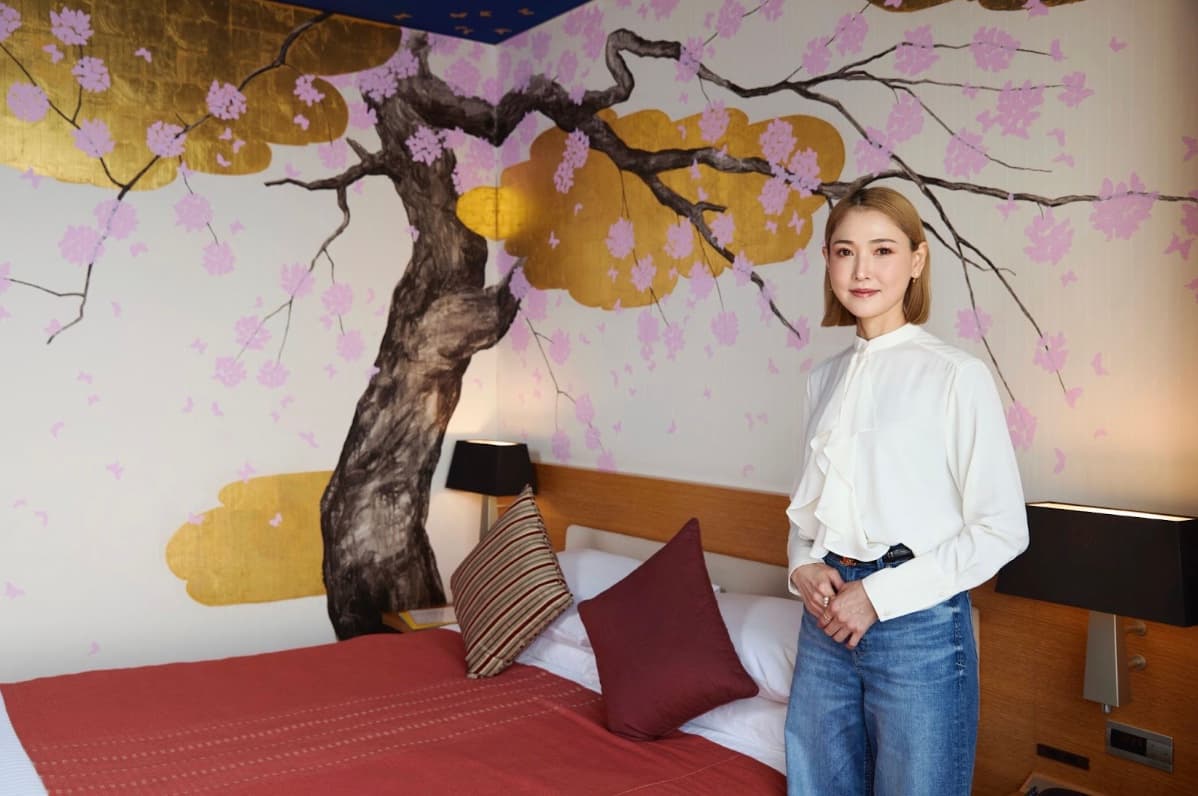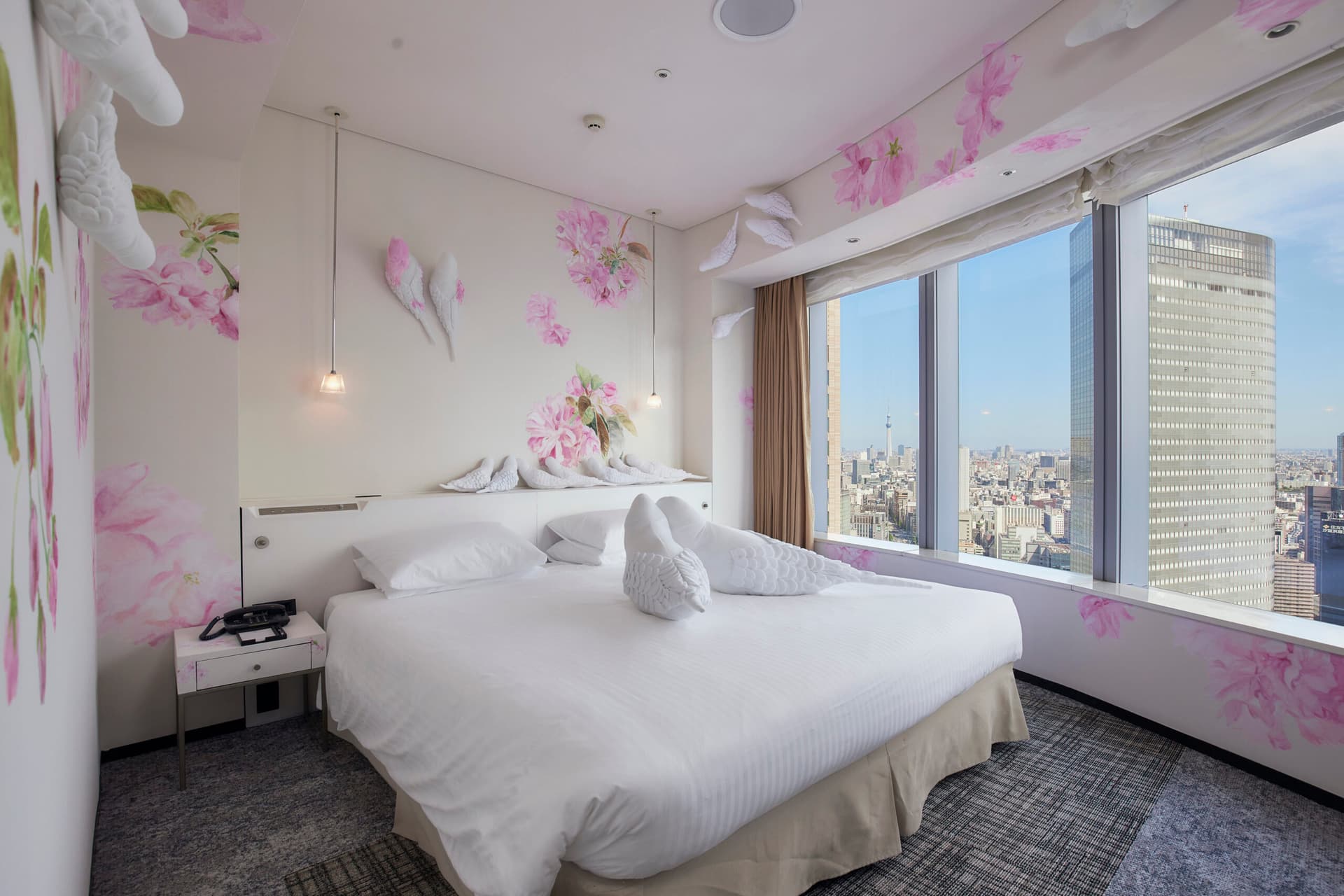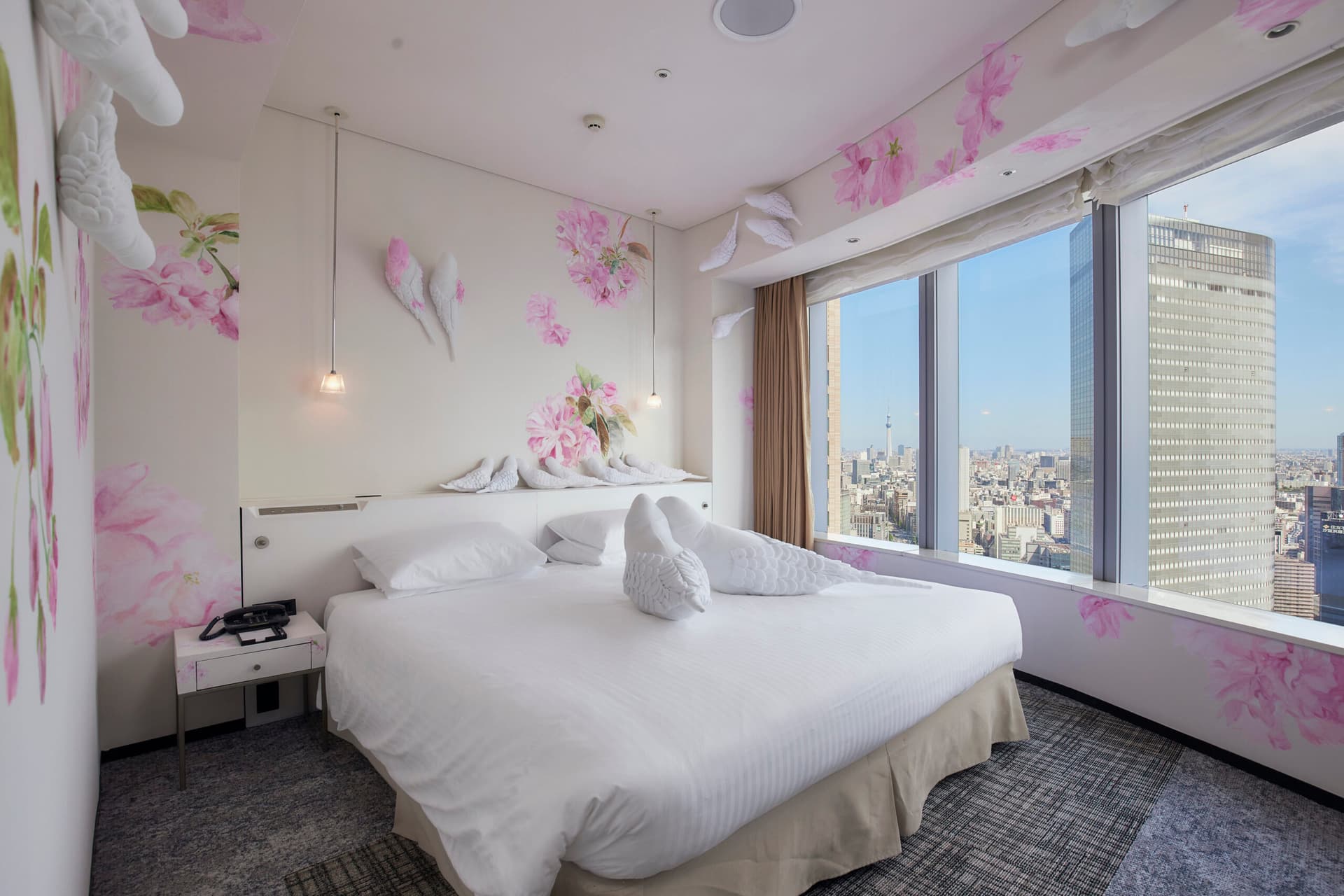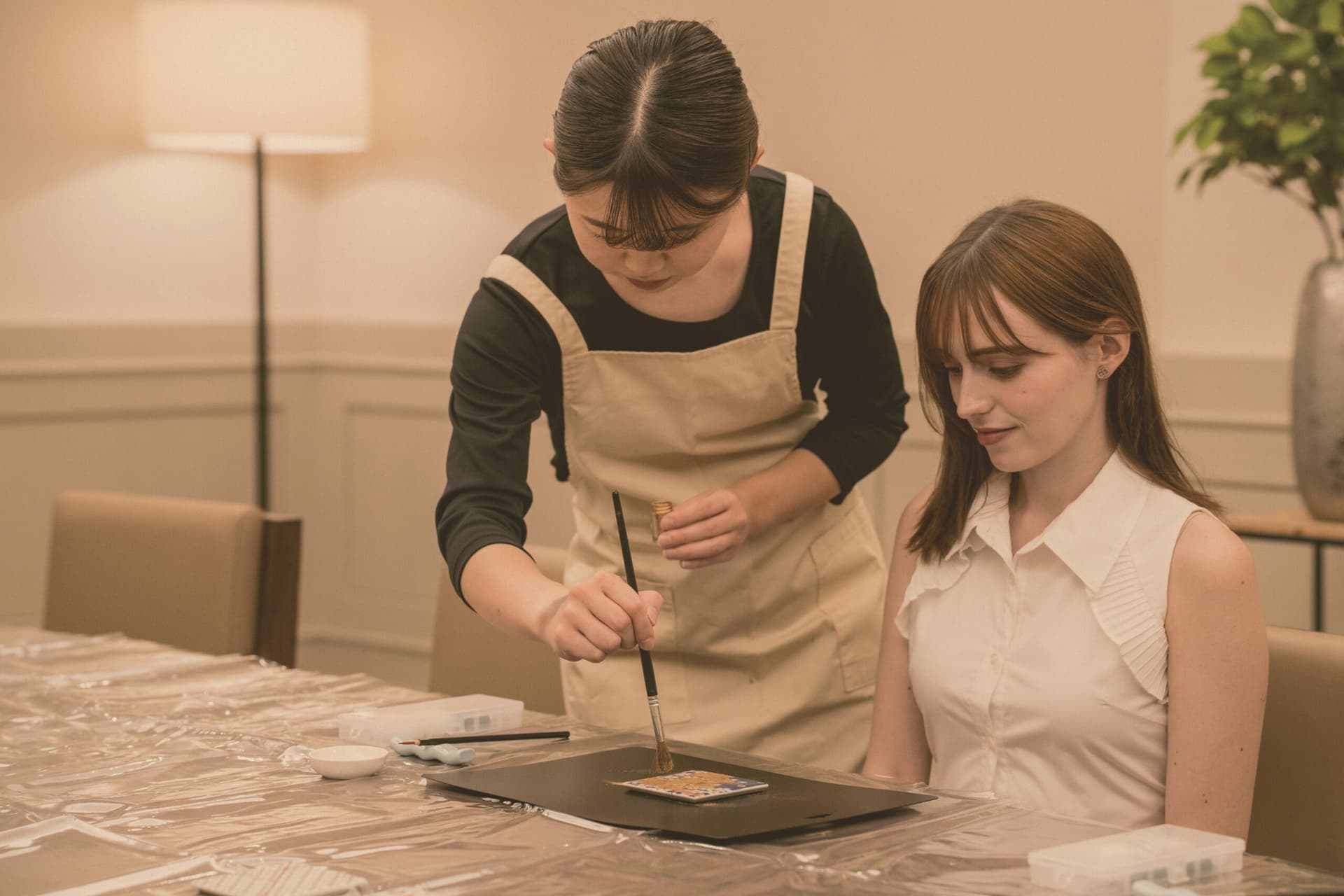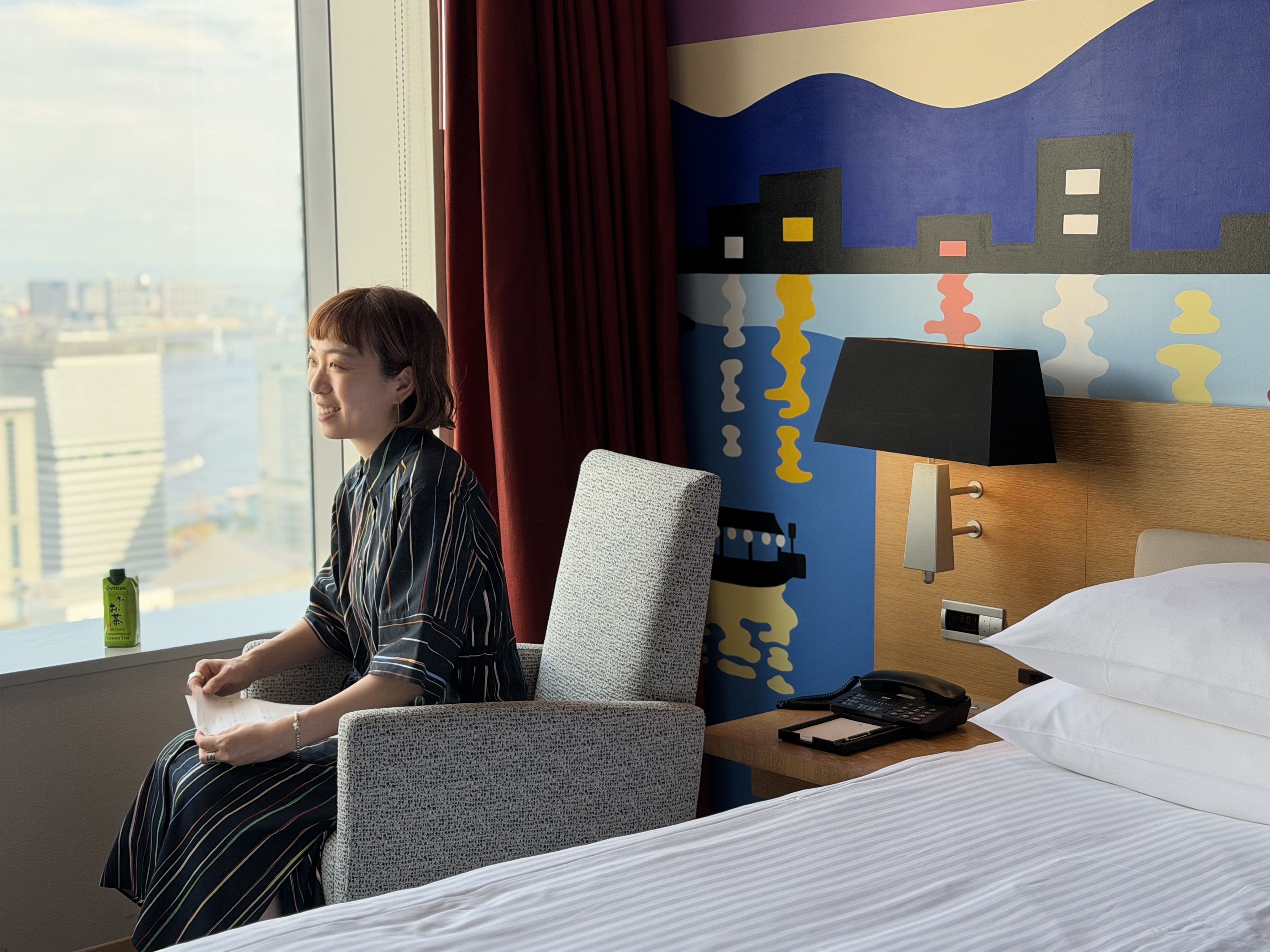
At Park Hotel Tokyo (Operated by Shiba Park Hotel Co., Ltd. / Minato-ku, Tokyo / President: Noriyoshi Tanaka), artists paint directly onto the walls and ceilings of our guest rooms, shaping each space in its entirety into a single art installation. We call them Artist Rooms.
Taking Japanese culture and Japanese aesthetics as its themes, the project works hand in hand with Japanese artists to create stay experiences found nowhere else.
Here we introduce the Artist Room “Fireworks” (available from September 2025) by Ayaïro. In this interview she speaks about the background to her work and the thoughts she carried into the room.
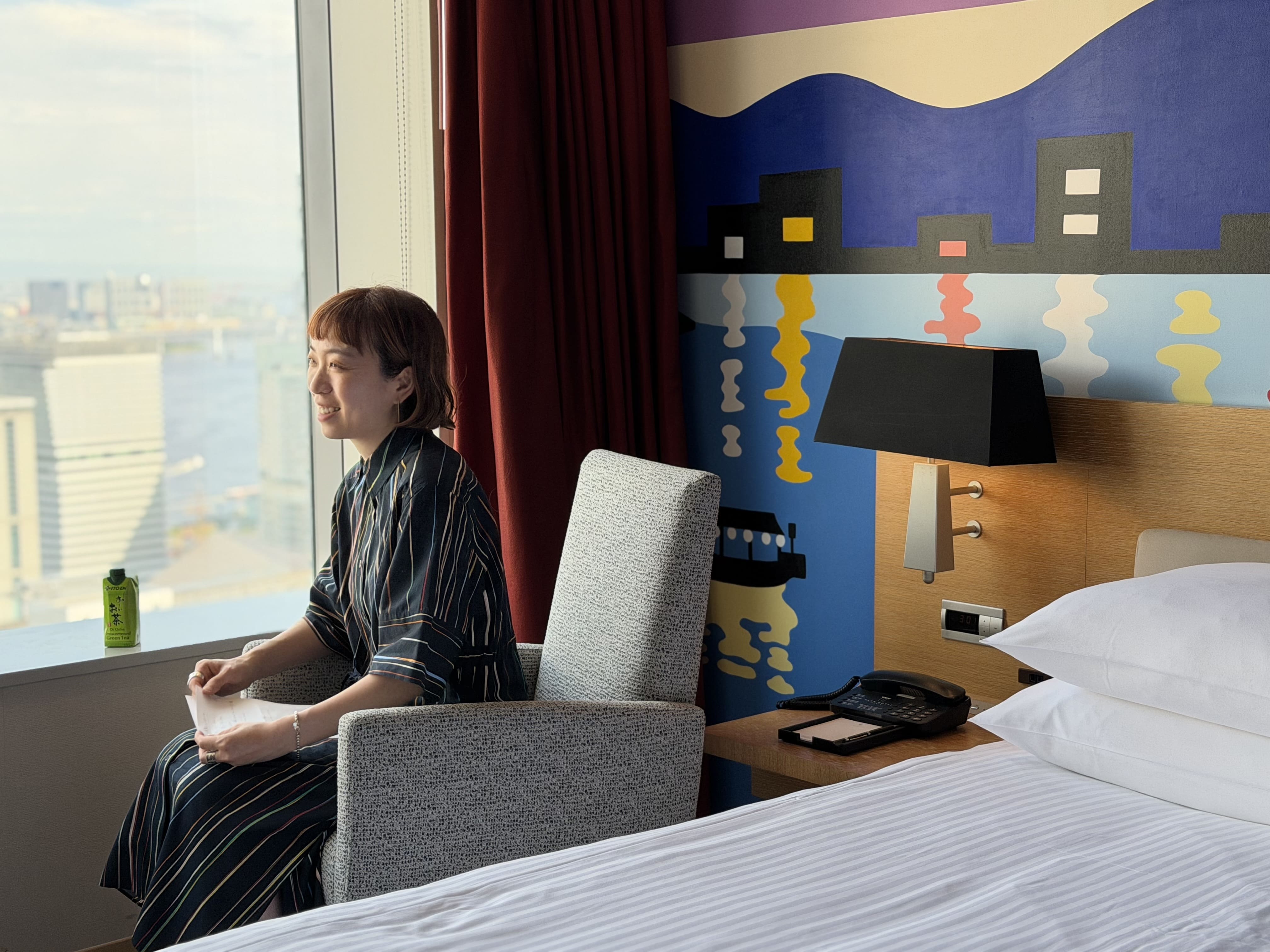
From English to Art: How Ayaïro Became a Japanese Artist
Q1. You graduated from Tokyo University of Foreign Studies with a degree in English before taking the path of an artist. Could you tell us about your background, and what first drew you to art?
It may look as though I have moved between unrelated things, but within me it all connects in a single line. I loved to draw from the time I was small, and a fascination with Hollywood actors led me to study English; then, through studying abroad, I came into contact with other cultures. As I did, I began to look more closely at my own identity, and it was the sense that drawing let me understand something about myself that led me to start painting works themed on childhood.
Satoyama and Childhood: The Origins of Her Japanese Art
Q2. Your works depicting Japan’s satoyama landscapes and the children who live in them have a distinctive world of their own, one that carries a sense of nostalgia. Could you tell us how memories of childhood shape the way you paint today, and what thoughts you bring to your work?
The way I see my own work has changed a great deal since I began. I no longer feel a strong awareness of “painting in order to convey something”; the work begins from an impulse — something moves me. As I go, I select and discard, over and over, and only afterwards do I realize what drew me. That process itself has become the axis of my practice.
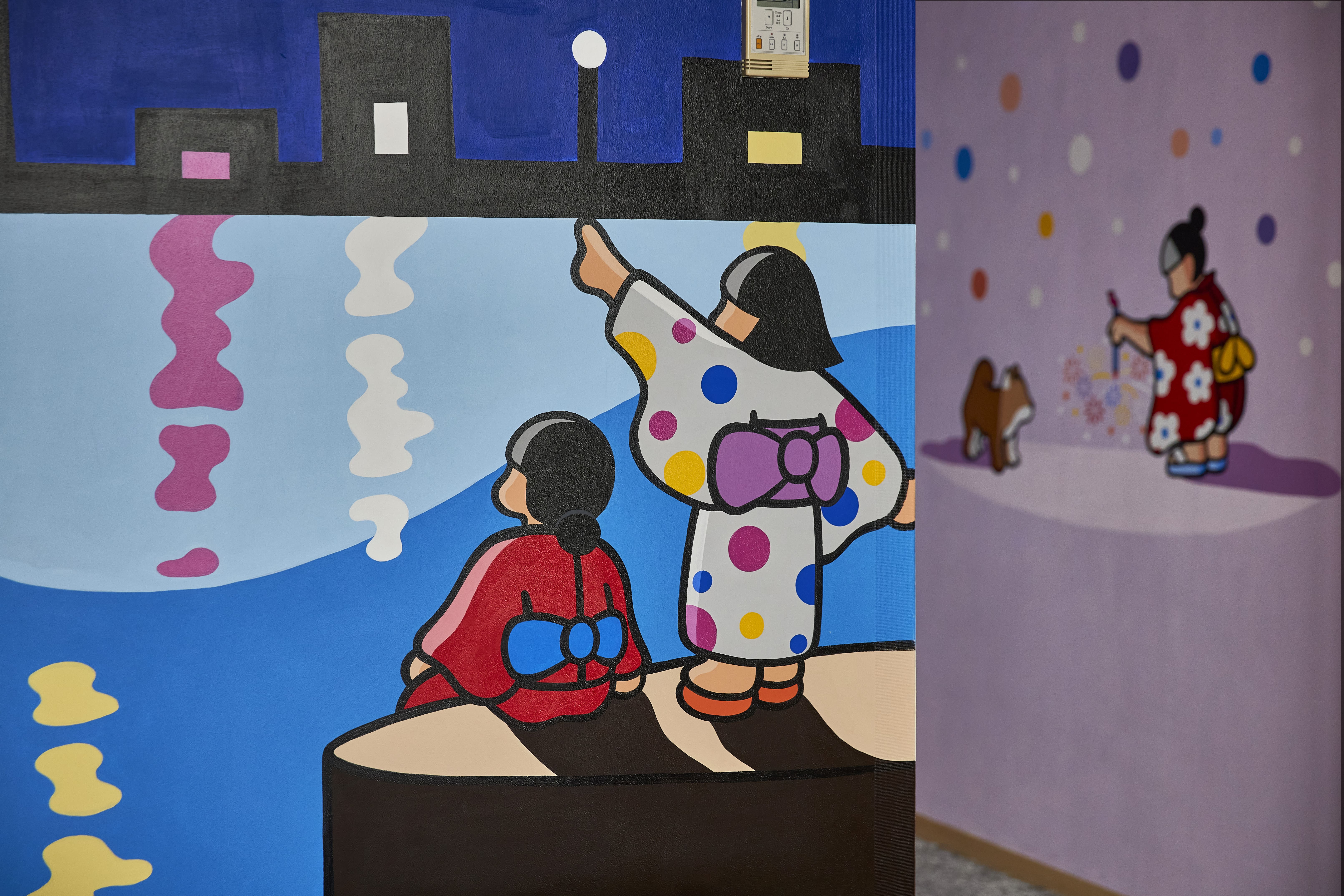
What I am expressing, as a result, is not the landscape itself but the sensation it gives rise to. To me, exploring that sensation is what creation is. I am strongly drawn to what rises up suddenly out of light and shadow, out of dusk, out of the ripple of water — beautiful, yet unable to hold its form; present, yet impossible to grasp. Childhood as a theme holds that same transience: it stays vivid in memory, and yet you can never return to it. I feel that I keep painting in order to understand “the beauty of transience” — the thread that has drawn me all along.
An Entire Room as Canvas: Creating an Immersive Art Experience
Q3. This project treated an entire guest room as a canvas, which must have made it a special experience, different from your previous work. Could you tell us how ideas differ when the expression takes in the space itself, what new challenges you took on, and where you found ingenuity — or difficulty?
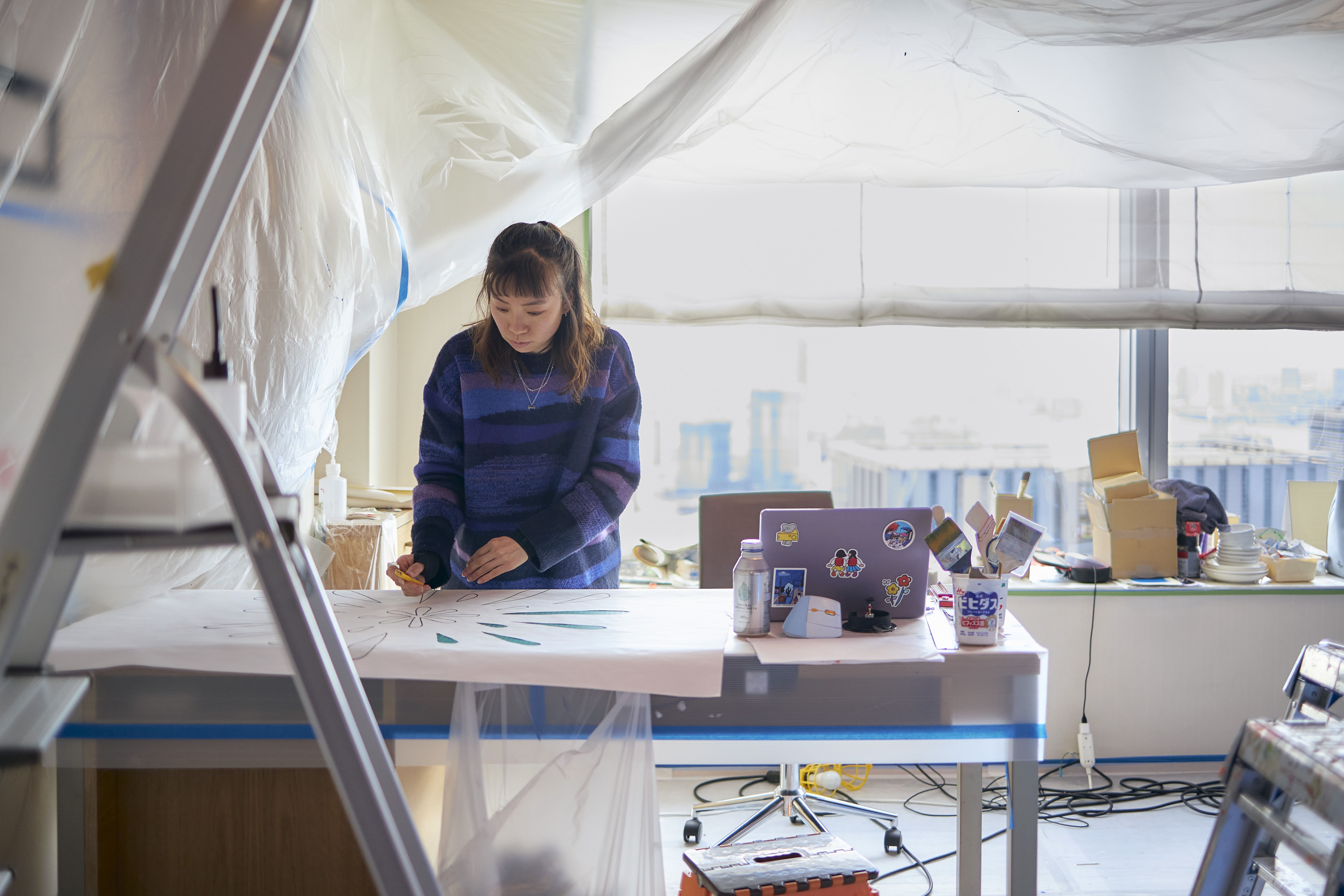
I usually paint on a flat canvas, and this was my first time working across a full 360-degree space. I approached it not as a work to be “looked at” but as a space to be “experienced” — designing everything from the scale and placement of the fireworks to the open space and the flow from the corridor, all in pursuit of a sense of immersion. Because this is a hotel, I felt the work had to stay close to the stay experience itself, and I was particularly conscious of using open space to create a room where guests can spend their time in comfort. What changed most in this project was not the motif but the perspective — seeing the entire space as a single experience.
The Story and the Colors Behind the “Fireworks” Art Installation
Q4. Seeing the room in person, we were struck by its warmth — a space that opens into a world only you could create. Could you tell us about the story and the concept behind it?
I chose fireworks as a motif for their Japanese character. The fireworks painted on the window glass catch their own reflection, creating a sense of unity in which outside and inside seem to run continuously into one another, so that the space feels all the more expansive. Fireworks are brilliant and exhilarating in the moment you see them, and yet they carry a fleetingness — gone in an instant. They are also a motif that symbolizes “the beauty of transience,” and I layered their brilliance with that transience in my expression.
Color is an element of great importance to me. The gradation of dusk expresses the very sensation of shifting — not distinctly, but hazily, wavering — and it is one of the expressions I hold most dear. By bringing black into the upper part of the room, I let the flow of time and a sense of depth come through, and I was conscious of the balance that draws the whole together. I painted with care for expression rooted in my own sensations.
A Message to Guests from Overseas: Touching Japanese Culture
Q5. Park Hotel Tokyo welcomes many guests from overseas. What kind of experience would you like them to have in this room? And do you have a message for the guests who stay here?
Fundamentally, I hold no set intention of “this is how I want you to feel”; more than anything, I would be happy if you would simply enjoy the space freely. If I had to name one thing: how people feel about fireworks differs greatly from culture to culture, country to country. In Japan, I think many people share a sense of them as something not only beautiful, but attended by the fleetingness and the ache of a summer that vanishes in an instant. That delicate aesthetic sense is, I feel, one of the things that makes Japan Japan. So for guests visiting from overseas, I would be very glad if a stay in this room became an occasion to touch Japanese sensibility.