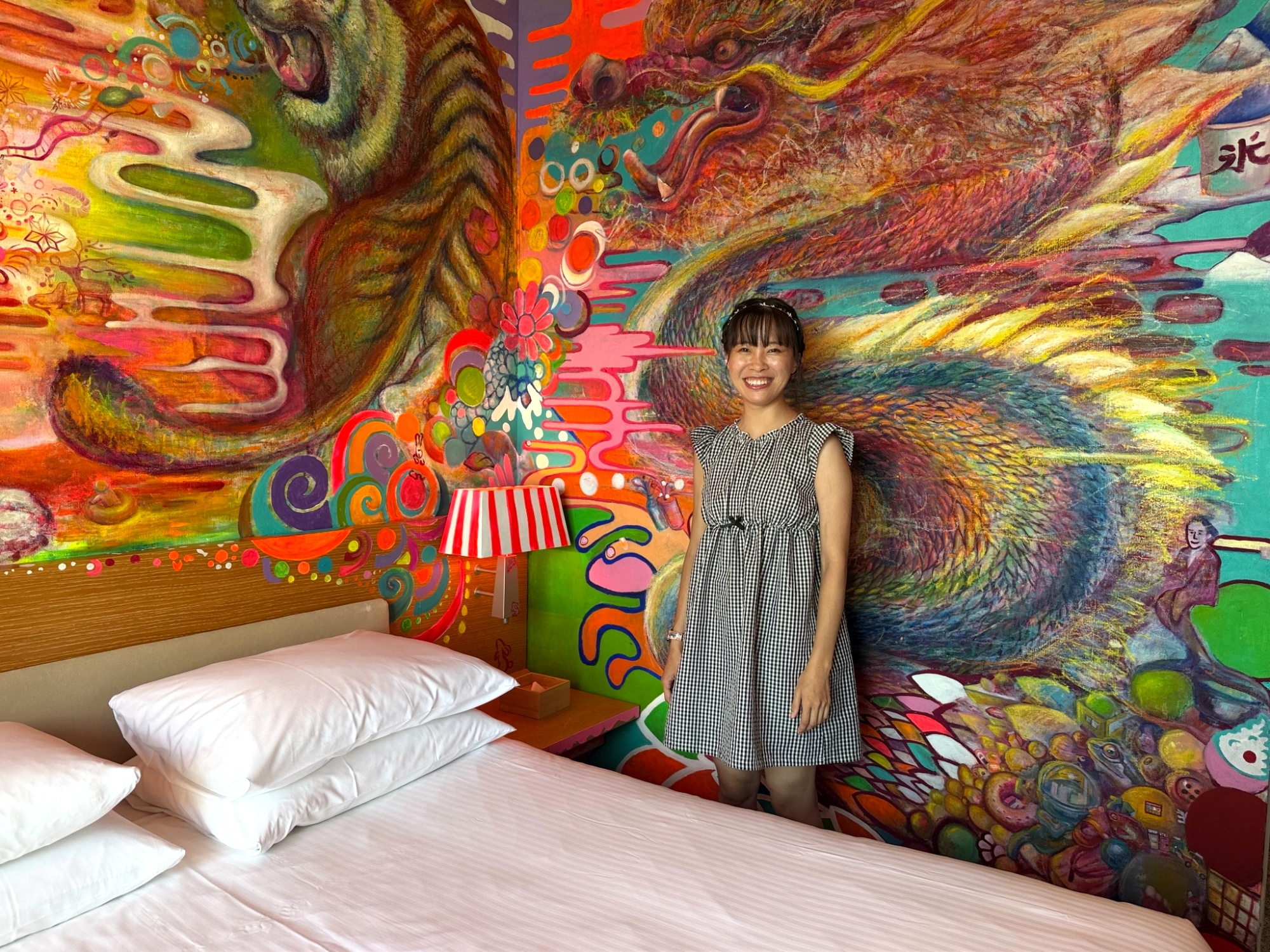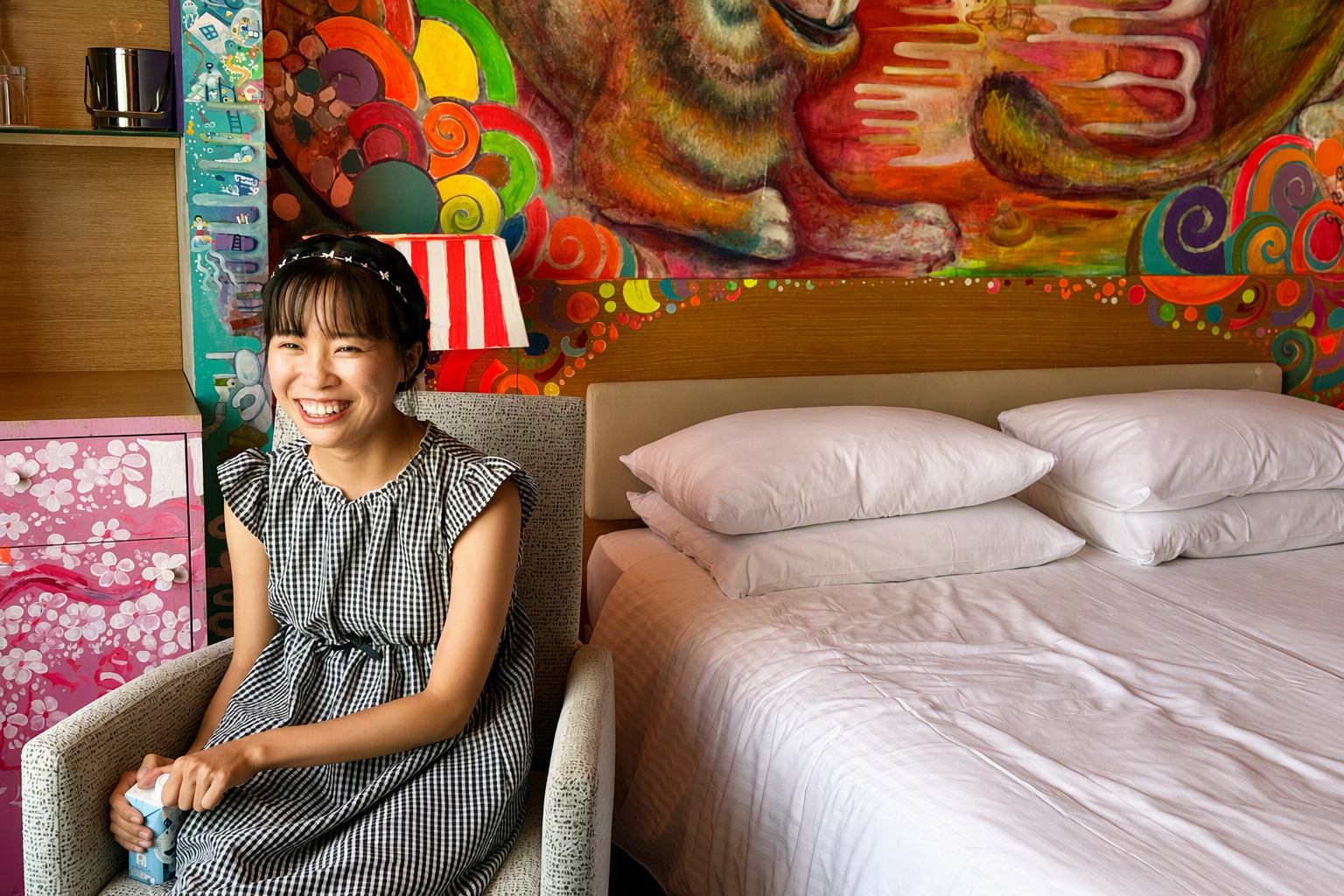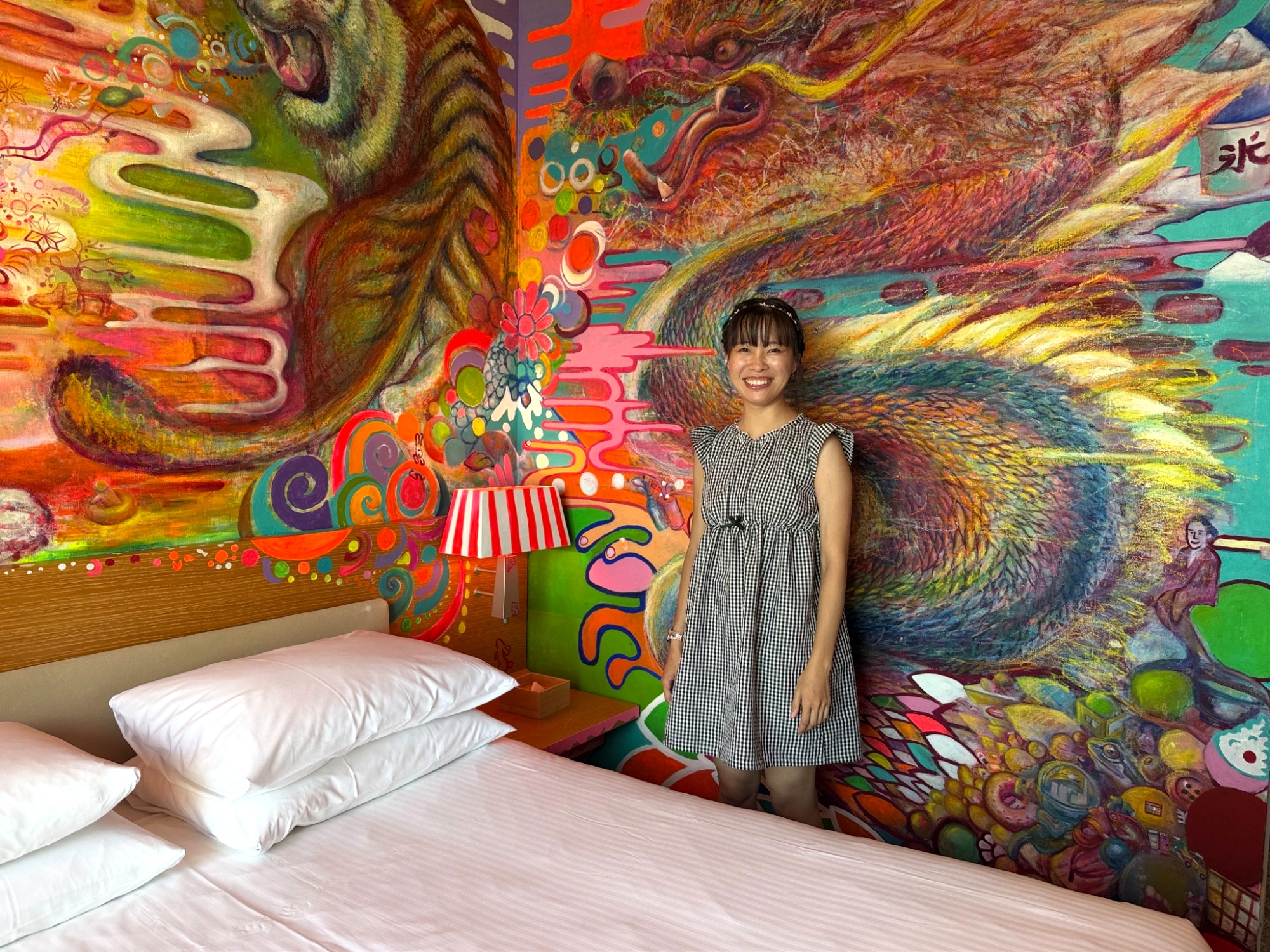
Park Hotel Tokyo, operated by Shiba Park Hotel Co., Ltd. (Minato-ku, Tokyo; Representative Director and President: Noriyoshi Tanaka), develops its “Artist Room” project as one of its initiatives to share Japanese culture and aesthetics with the world. Artists paint directly on the walls and ceilings of guest rooms, transforming each space itself into a work of art. Through an interview with Misa Ohashi, a registered Paralym Art artist who created the Artist Room “Treasure Box” with her distinctive and vividly colorful artistic vision, this release explores the ideas behind motifs that evoke Japanese culture—including dragons, tigers, and turtles—as well as the creative process behind the room.
Q1: Please tell us about your background and what inspired you to pursue art.
I have loved drawing since I was a child and was the kind of child who would become completely absorbed in drawing on the walls of my house or under desks. At university, I studied drawing, oil painting, watercolor, and other techniques, but most of the work was based on assigned projects, and I sometimes felt frustrated by not being able to express myself freely.
A turning point came when one of my professors asked me, “What is something you can pursue for a lifetime?” That question inspired me to begin creating works that allowed me to confront and explore my own feelings, expressing invisible emotions such as worries and anxieties. It brought me great joy when my work reached people who shared similar feelings and resonated with them.
There are things that can be difficult to communicate through words, but that can be conveyed precisely because they are expressed through art. Experiencing that power is what has kept me creating.
Q2: What do you value most in your creative process?
The most important thing to me is that I genuinely enjoy what I am doing. Rather than creating something to be judged or evaluated by others, I try to make work that I can sincerely say I love.
Recently, I have also been challenging myself to draw with my left hand. When I use my right hand, I tend to think, “I have to draw well,” but with my left hand, I can draw freely without that extra pressure. I have even tried holding a crayon between my toes and drawing with my foot, which was a lot of fun.
I usually work between my home and my studio. As for materials, I particularly like acrylic paints, which I have been familiar with since childhood. I am drawn to their beautiful colors and the freedom of expression they allow.
Q3: What does expressing yourself through art mean to you?
More than anything, drawing is fun. When I am creating, I try not to overthink things and instead focus on drawing freely. Sometimes I worry that I may not be able to finish a piece, but the sense of accomplishment I feel the moment it is completed is special every time.
I am not very good at expressing myself in words, but I believe there are things that can be communicated precisely because they are expressed through art. What makes me happiest is knowing that someone has felt something through my work.
My goal for the future is to become an artist whose work is recognized around the world. Another dream of mine is to build a house with the income I earn from painting. I hope to continue pursuing my own unique form of expression while sharing my work with as many people as possible.
Q4: What did you challenge yourself to do when creating the Artist Room “Treasure Box”?
Creating an Artist Room, where the entire hotel guest room becomes a single work of art, was a very different challenge from my usual work on canvas. Park Hotel Tokyo displays works by many different artists, so I drew inspiration from them while also challenging myself to explore forms of expression that I do not normally use.
For example, I combined realistic depictions with illustration-like expressions, and also painted Edo-period streetscapes within a fantastical setting.
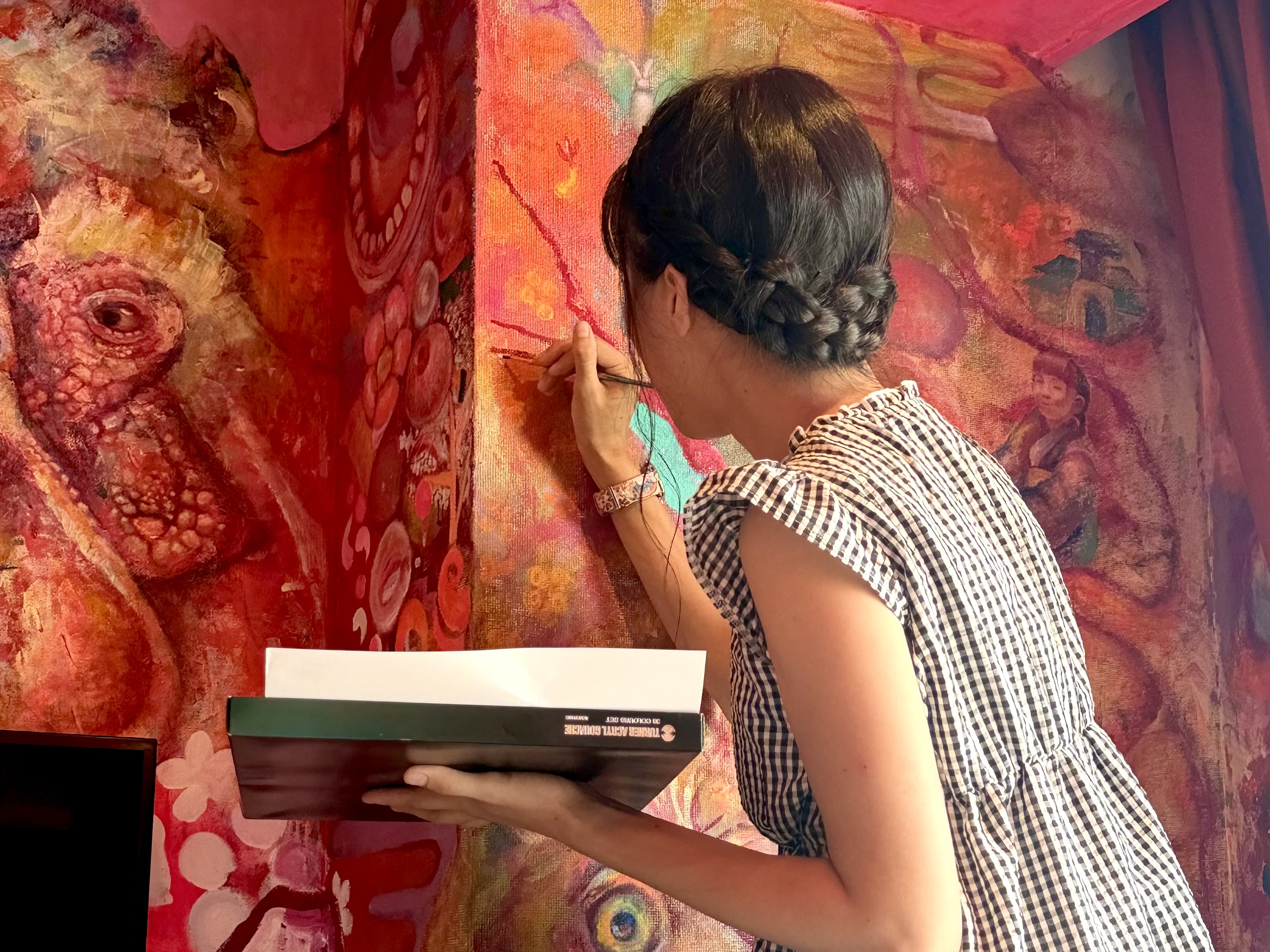
After the interview, Ohashi adds details to areas that caught her attention, expanding her ideas and refining the work as she paints.
I also wanted to express a sense of “Japaneseness” in this work. I expanded my approach by incorporating elements reminiscent of traditional Japanese painting and ukiyo-e, while naturally weaving motifs that would evoke Japan into the work.
Q5: Please tell us about the story behind “Treasure Box.”
The theme of this room is “Treasure Box.” I began with the image of smoke rising from the Treasure Box when it is opened, and that smoke led me to imagine the dragon that I placed at the center of the work.
The tiger has always been one of my favorite motifs, and I am drawn to the power and beauty of its markings. The turtle, meanwhile, evokes Ryugu-jo, the Dragon Palace. By connecting the Treasure Box, dragon, tiger, and turtle as part of a single story, I wanted to create a distinctly Japanese world.
I also incorporated elements reminiscent of traditional Japanese painting to create a space where guests can experience Japanese culture and aesthetics. Inside the room, there is also a motif that looks like shaved ice while at the same time resembling Mount Fuji.
Rather than designing every detail in advance, I placed importance on allowing my ideas to expand as I painted. Like treasures appearing one after another from the Treasure Box, new ideas and motifs emerged naturally, eventually developing into the unique world of this space.
Q6: What was it like creating the work while staying at Park Hotel Tokyo?
I worked on this piece over a period of about seven months, and during that time, I was able to stay at Park Hotel Tokyo while continuing to create it. The time I spent engaging with the work at the hotel was extremely valuable, and I felt it provided an environment where I could fully concentrate on the creative process.
After the room was completed, I also had the opportunity to stay overnight in the room I had painted. However, the entire room was so colorful, and I was surrounded by my own artwork, that I did not get much sleep. (laughs)
Spending time in the completed space allowed me to experience the work from a different perspective than I had while creating it. Including the approximately seven months I spent working on the piece, the time I spent at the hotel has become a very special memory for me.
Q7: Do you have a message for guests who stay in this room?
I would be happy if guests staying in this room could enjoy it with the same sense of wonder they had as children. I have painted many different motifs, including dragons, tigers, turtles, and Mount Fuji, and I hope guests will look around freely, make their own discoveries, and imagine their own stories.
True to the theme of “Treasure Box,” I have scattered many elements throughout the space that I hope will spark the imagination. Whether guests are from Japan or overseas, I hope they will enjoy the stay itself as a special experience and take home even a little of that sense of excitement.
In cooperation with the Paralym Art Secretariat
Artist Profile
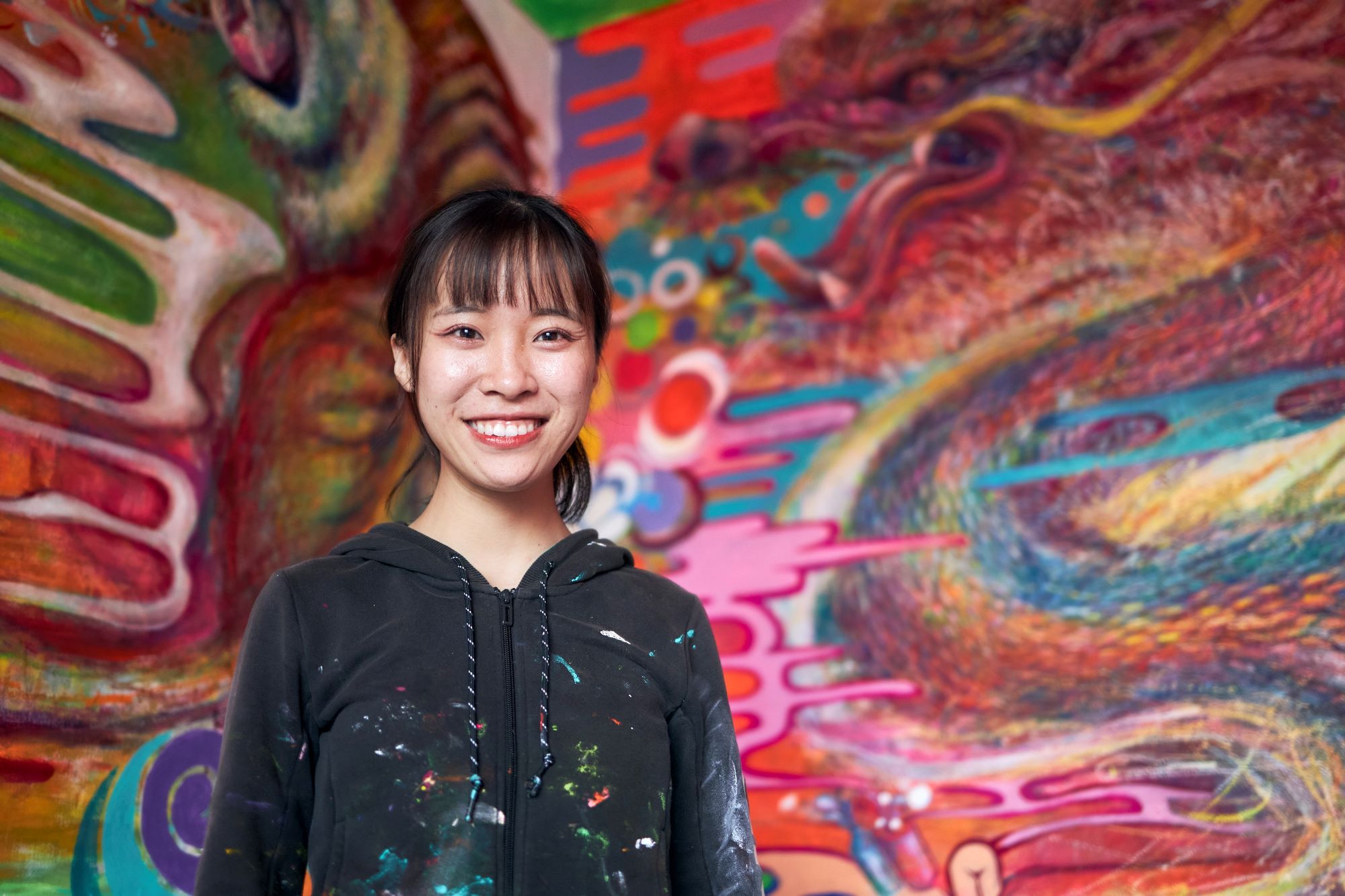
Misa Ohashi was born in 2000 and is based in Kanagawa Prefecture. She registered as a Paralym Art artist while studying at Yokohama University of Art & Design. She won the Runner-Up Grand Prix at the Paralym Art World Cup 2022.
About Park Hotel Tokyo
Park Hotel Tokyo is a sister hotel of Shiba Park Hotel, which was founded in 1948. Located on the 25th through 34th floors of Shiodome Media Tower, the hotel offers spectacular views of Tokyo Tower and Mount Fuji.
The hotel has 268 guest rooms, including 52 “Artist Rooms,” in which artists have painted directly on the walls. The Artist Room project is based on the concept of creating “a space and time where guests can experience Japanese aesthetics” and has received an Excellence Award at the Japan Tourism Awards.
More than 400 works of art are displayed throughout the hotel’s lobby and corridors. The hotel also hosts art and cultural experiences, including tea service and painting experiences.